
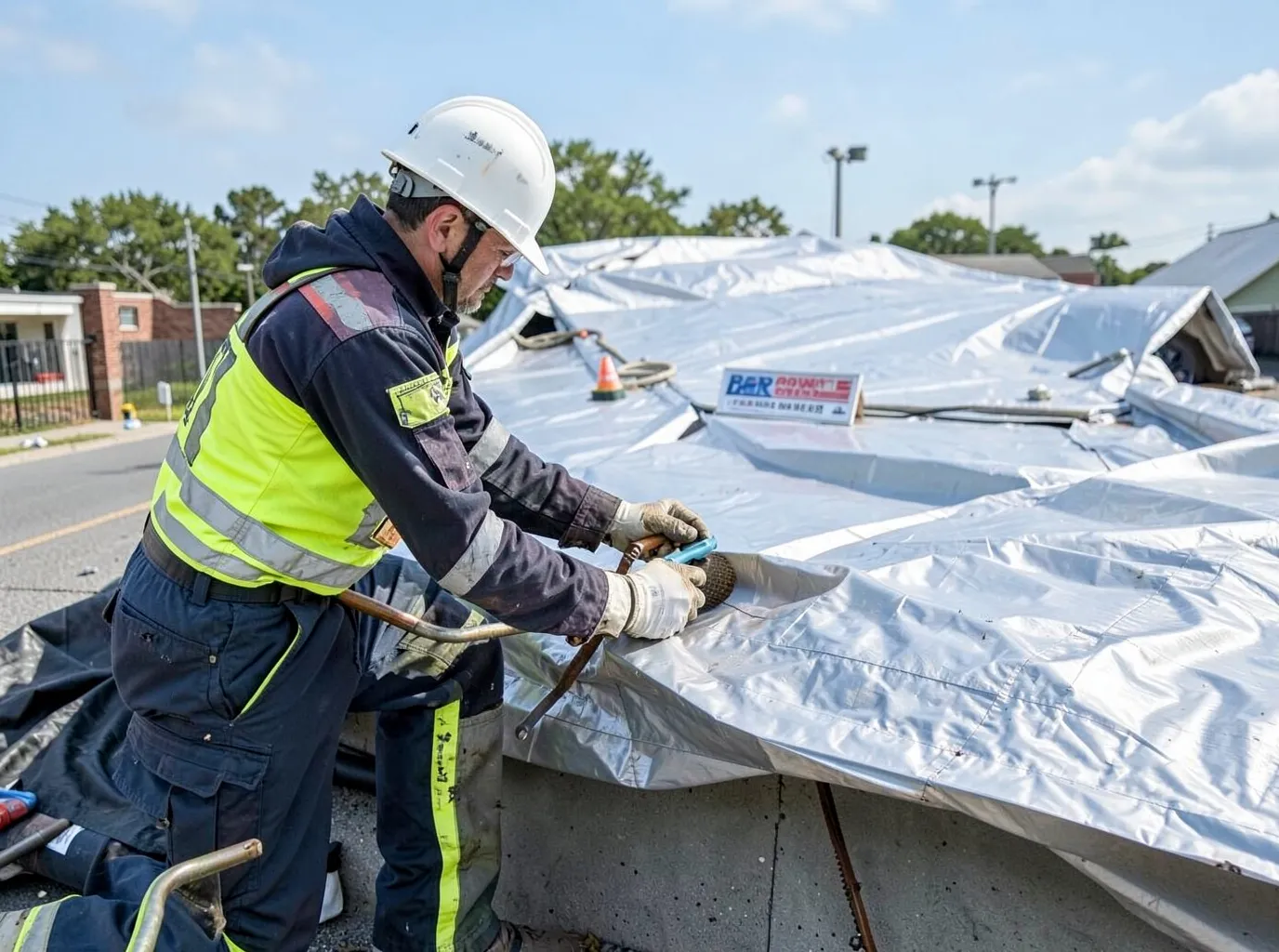
Port Orange sits in a humid subtropical climate where sudden summer thunderstorms and occasional tropical systems drive wind-driven rain under shingles on homes built from the 1970s through the 1990s in neighborhoods such as Spruce Creek and Twin Lakes. When a leak opens, tarping buys time before water reaches drywall or insulation. We use 6-mil reinforced polyethylene sheets secured with 1x4 battens and hurricane-grade screws into rafters, never just staples, because the constant humidity softens wood and reduces holding power.
Access matters on the flat lots near the Halifax River and along the Port Orange Causeway where many homes sit on slabs with low-pitch roofs. Edge cases include two-story homes in Riverwalk where scaffolding is required and older Cypress Head properties with brittle tile that cracks under foot traffic. We always check for active electrical lines and attic insulation before stepping on the roof, and we leave the tarp edges flashed under the ridge cap so wind does not lift the cover during the next afternoon storm.
Volusia County permitting rules require temporary tarps to remain in place no longer than 90 days without a repair permit. We document every installation with photos and leave a dated tag visible from the street so homeowners avoid fines when inspectors drive through Allandale or Port Orange Hills after a named storm.
Homeowners often wait until water stains appear on ceilings before calling. By then moisture has already reached the decking in homes near Dunlawton Avenue where oak canopies hold debris against the roof edge. A same-day tarp prevents that progression and gives time to schedule permanent fixes with local crews already booked after regional weather events.
Technician insight
In Port Orange, the thing that catches most people out with Emergency Roof Tarping is the way afternoon sea breezes off the Halifax River turn a loose tarp into a sail within hours. Homes in Allandale and near Spruce Creek Park often have older rafters softened by decades of humidity, so screws must hit solid wood or the cover fails before the next rain.
Wind-driven leak after summer storm
A Spruce Creek homeowner noticed water along a bedroom wall after a fast-moving thunderstorm. We found lifted shingles at a valley near the Cypress Head Golf Club side of the property. A reinforced tarp was installed the same afternoon, edges secured into rafters, and the interior stayed dry until a full shingle replacement the following week.
Emergency Roof Tarping Services We Offer
✓Storm Damage Tarping
Immediate coverage after wind or hail events to protect interiors in neighborhoods like Sugar Mill and Spruce Creek.
✓Hurricane Preparation Tarping
Pre-storm securing of vulnerable sections on homes near the Halifax River before forecasted tropical systems arrive.
✓Leak Isolation Tarping
Targeted coverage over active leak points identified during attic inspections in older Port Orange Hills properties.
✓Two-Story Roof Tarping
Safe installation using proper staging on taller homes common along the Port Orange Causeway and Riverwalk.
✓Tile Roof Tarping
Gentle securing methods that avoid cracking brittle barrel tile found on many Cypress Head and Allandale roofs.
Emergency Roof Tarping Cost in Port Orange, FL
| Service | Typical Range | What Affects It |
|---|---|---|
| Single-story section under 200 sq ft | $350–$550 | Ground access and simple pitch reduce labor |
| Two-story section | $600–$950 | Scaffolding or ladder jacks required |
| Tile roof adjustment | $150–$300 | Extra care to avoid cracking existing tiles |
| After-hours or weekend response | $200–$400 | Added for calls outside normal daytime hours |
Ranges are typical for Port Orange, FL and confirmed with an exact written quote before any work starts.
How it works
- 1
Site Assessment
We inspect from the ground and attic to locate the leak, note roof pitch, and check for nearby power lines before climbing.
- 2
Material Staging
Reinforced tarp, battens, and screws are cut to size on the ground to limit time spent on the wet surface.
- 3
Secure Installation
Sheets are laid with proper overlap, fastened into rafters, and edges tucked under ridge lines to resist wind uplift.
- 4
Documentation and Handover
Photos are taken, a dated tag is placed, and the homeowner receives instructions on monitoring until permanent repair.
Pricing
Emergency tarping is priced by roof section size and access difficulty rather than flat rates.